Call Us Today!
(631) 421-4131


If you're told a tooth needs a root canal, there's no cause for panic. Modern root canal therapy is a predictable, refined procedure designed to stop pain, remove infection, and preserve teeth that otherwise might be lost. For most patients the experience is no more uncomfortable than a standard dental filling, and it can restore function and comfort quickly.
At the office of Soundview Dental, we combine up-to-date technology with patient-focused care to make root canal therapy as comfortable and efficient as possible. Your safety, comfort, and long-term oral health guide every step of treatment, and our team will help you understand the options and what to expect at each visit.
A preserved natural tooth provides the best balance of function and aesthetics. When the inner tissues of a tooth are damaged by decay or injury, root canal therapy removes the problematic tissue while keeping the outer tooth intact. This approach helps maintain your bite, prevents shifting of neighboring teeth, and supports the jawbone in ways that a missing tooth cannot.
Root canal treatment is engineered to resolve infection and halt the spread of disease from the tooth to the surrounding bone and gum tissues. In many cases a treated tooth will provide many years — often a lifetime — of reliable service when it is restored and cared for properly. Saving the natural tooth also avoids the additional procedures and maintenance that come with replacing a lost tooth.
We approach each case with a focus on preserving as much healthy tooth structure as possible. That means careful diagnosis, precise cleaning of the canal spaces, and a thoughtfully chosen final restoration to rebuild strength and appearance. Our team will explain why a root canal is recommended and how it fits into a long-term plan for your oral health.

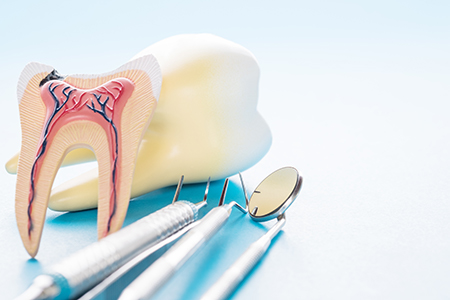
Inside each tooth is a delicate network of connective tissue, nerves, and blood vessels known as the dental pulp. When that pulp is irritated by deep decay, a crack, or a traumatic blow, it can become inflamed or die. Because the pulp sits within a confined space, swelling and pressure can produce severe pain and eventually lead to infection that affects both the tooth and surrounding tissues.
Not every sore tooth needs a root canal, but certain signs commonly point toward pulp involvement. Increased sensitivity to hot or cold that lingers after the stimulus is removed, sharp pain when biting down, or a tooth that darkens in color are all indicators that the inner tissues may be compromised. In some cases, an infection can be present with minimal symptoms and is discovered during a routine exam and radiographic evaluation.
When vital tissue is irreversibly damaged, removing that tissue and sealing the internal spaces eliminates the source of pain and infection while leaving the external tooth structure in place. With appropriate restoration afterward, the treated tooth can continue to function normally, allowing you to eat, speak, and smile with confidence.
While symptoms can vary, the following signs often suggest that a tooth may require root canal therapy:
Persistent or worsening toothache that interrupts sleep or daily activities is a clear sign that a deeper problem may exist. Pain that continues despite simple remedies should prompt an examination to determine whether the pulp is involved.
Unusually strong sensitivity to hot or cold foods and beverages — especially when the sensation lingers — can indicate that the internal tissues are inflamed or damaged and need professional assessment.
Biting-related pain or tenderness when the tooth is tapped may signal that the nerve tissues are affected. This kind of sensitivity can arise from cracks, deep decay, or infection reaching the root.
A tooth that changes color — becoming gray, brown, or otherwise discolored — can reflect internal changes after trauma or long-standing decay. Color change is often a visual clue that requires further investigation.
Physical damage to a tooth can expose or injure the pulp even when the break seems minor. Prompt evaluation after an injury helps determine whether root canal therapy is needed to protect the tooth.
Gum swelling, a persistent pimple-like bump on the gum, or any draining area near a tooth often signals infection. Early treatment can prevent more serious complications and discomfort.
When infection reaches the supporting bone, it can cause a tooth to feel loose. Root canal therapy can address the infection and allow the surrounding tissues to heal in many cases.

Treating an affected tooth promptly reduces the chance of complications and typically leads to a quicker, more comfortable recovery. Small problems inside a tooth can progress to larger infections that spread beyond the root tip into the surrounding bone if left untreated. Early intervention simplifies care and often preserves more of the natural tooth structure.
A routine dental exam with appropriate X-rays can reveal early signs of pulp involvement before severe symptoms develop. When a problem is identified, your dentist will explain the findings, outline the recommended course of action, and answer your questions so you can make an informed decision about care.
Timely root canal therapy not only relieves pain and removes infection, it also reduces the need for more invasive procedures later on. With proper restoration and home care, a treated tooth can remain healthy and functional for many years, helping you avoid additional restorative treatments that might otherwise be necessary.
Root canal procedures today are precise and patient-centered. The treatment begins with numbing the area so you remain comfortable throughout the appointment. A small rubber dam is often used to isolate the tooth, keeping it dry and protecting the oral environment while the dentist works.
Once the tooth is accessed, the dentist gently removes the diseased or dead pulp tissue, cleans and shapes the internal canals, and disinfects the space. These steps eliminate the source of infection and prepare the canal system for a biocompatible filling material that seals the tooth from recontamination.
Some cases can be completed in a single visit, while others require two or more appointments when infection control or complex anatomy warrants additional time. If you experience dental anxiety, our practice offers options to help you relax during treatment so the experience is manageable and calm.
After the procedure, most patients notice that the original toothache subsides quickly as the source of infection is removed. Mild soreness or sensitivity around the treated tooth and nearby tissues is normal for a few days and can usually be managed with over-the-counter pain relievers as recommended by your dentist.
It’s important to protect the treated tooth while it heals. Many teeth receive a temporary restoration after root canal therapy and will later require a permanent crown or equivalent restoration to restore full strength and function. This final step reduces the risk of fracture and helps the tooth perform like a natural tooth for years to come.
Continuing good oral hygiene, keeping regular dental checkups, and following any post-treatment instructions are the best ways to ensure long-term success. If signs such as increasing pain, swelling, or persistent symptoms occur after treatment, seek prompt attention so the situation can be evaluated and addressed.
With careful technique and proper follow-up, a tooth treated by root canal therapy can continue to serve you effectively for many years. If you have questions about root canal treatment or want to know whether it is the right option for a particular tooth, contact us for more information and guidance.
A root canal procedure is the best way to save a tooth that has been damaged by decay or injury and preserve your natural smile. The alternative is an extraction and treatment to replace the tooth. While at times a tooth is non-restorable and an extraction is the only option, when possible, it’s best to try and save your natural tooth. With proper care, a tooth with root canal therapy can serve your smile well for many years to come.
Despite lingering myths from before the age of modern dental anesthesia and technology, having a root canal procedure today is as routine and comfortable as visiting the dentist for a filling. While the procedure is performed under local anesthesia with your tooth completely numbed, we can also discuss options in dental sedation.
Whether the symptoms of a dental infection subside after a course of antibiotics, a draining abscess provides you with some temporary pain relief, or a tooth with radiographic evidence of pathology has not yet developed symptoms, it’s essential, before an infection worsens or occurs, to have a root canal procedure performed. In this way, the tooth can be disinfected, filled, and sealed to protect your health and avoid further problems.
If you have sustained a dental injury, have a toothache, jaw pain, swelling, or are experiencing any other unusual and uncomfortable oral symptoms, contact our office immediately for care. Dental problems that have not been evaluated and treated can significantly worsen, producing more severe damage and consequences for the involved teeth, your oral health, and even your overall wellbeing. Once you get in touch with our office, our friendly and compassionate office team will get you in for care at your earliest convenience.
While some root canal procedures can be completed in one visit, others may involve 2 or 3 appointments. How long it takes depends on various factors, including active infection, the number of canals in the tooth, and the tooth’s location or anatomy.
With a success rate that exceeds 95%, root canal therapy remains the most effective procedure to save a tooth in which the inner vital tissues have been damaged. However, as with all healthcare procedures, there are a small percentage of cases where the teeth become symptomatic a second time. The good news is that many of these teeth can still be saved with root canal retreatment or a minor surgical procedure known as an apicoectomy.
The best ways to maintain a tooth with root canal therapy are to get the proper restoration required to rebuild and protect the tooth, maintain proper oral hygiene, and schedule appointments for routine dental checkups and care.
Saving a tooth with root canal therapy is a wise investment that, in the long run, is typically less costly and invasive than having the tooth extracted and replaced with a fixed bridge or implant. As far as the exact cost of care, it can vary depending on which tooth is being treated. Many dental insurance plans provide coverage for root canal therapy. At the office of Soundview Dental, we do our best to optimize your dental benefits and minimize your out-of-pocket expenses. Our staff will answer all your questions about the cost of care and discuss all your payment options.
At the office of Soundview Dental, we use the latest technology and most effective methods of care to provide precise and gentle care. Our reputation for excellence is based upon a consistent record of achieving successful treatment outcomes while providing prompt, stress-free, and convenient treatment for every type of dental need.
Root canal therapy is a treatment that removes diseased or injured pulp tissue from inside a tooth, disinfects the internal canals, and seals the space to prevent recontamination. This procedure preserves the outer tooth structure so you can keep the natural tooth rather than having it extracted. Dentists recommend root canal therapy when pulp damage is irreversible due to deep decay, cracks, or trauma that threaten the health and function of the tooth.
Saving a natural tooth maintains biting efficiency, prevents neighboring teeth from shifting, and helps preserve the supporting jawbone. In many cases a treated tooth can function for many years with the proper restoration and home care. Early diagnosis and treatment often simplify care and improve long-term outcomes for the tooth.
Inside each tooth is the dental pulp, a network of nerves and blood vessels that can become inflamed or infected when exposed to deep decay, a crack, or a forceful impact. When the pulp is compromised, bacteria can enter the internal spaces and create infection that produces pain, swelling, or changes in tooth color. Because the pulp sits in a confined chamber, inflammation increases pressure and often causes intense or lingering discomfort.
Not every tooth with sensitivity requires a root canal, but persistent symptoms such as lingering temperature sensitivity, severe pain when biting, or a visible darkening of the tooth commonly indicate pulp involvement. Sometimes infection is discovered on X-rays during a routine exam even when symptoms are mild, which is why professional evaluation is important. Prompt treatment reduces the risk of the infection spreading to surrounding bone and soft tissues.
A modern root canal begins with careful numbing of the area so most patients are comfortable throughout the procedure, and a small rubber dam is typically used to isolate the tooth and keep it dry. The dentist then gains access to the pulp chamber, removes diseased tissue, cleans and shapes the canals, and disinfects the internal spaces before placing a biocompatible seal. Treatment may be completed in a single visit for straightforward cases, while more complex infections or anatomy can require two visits with interim medication.
Many practices also offer options to help anxious patients relax during treatment, and clinicians will explain each step and expected recovery before treatment begins. Records such as X-rays guide diagnosis and help determine the canal anatomy and extent of infection. After the root canal, your dentist will discuss the recommended final restoration to restore strength and function to the tooth.
Thanks to modern anesthesia and techniques, most patients report that root canal treatment feels no worse than receiving a routine filling, and many experience immediate relief from the preexisting toothache once the source of infection is removed. Local anesthetic numbs the area during the procedure, and dentists use gentle methods to minimize discomfort. If you have dental anxiety, additional measures to improve comfort are often available and can be discussed before treatment.
Mild soreness or tenderness in the treated area is common for a few days and can usually be managed with over-the-counter pain relievers as recommended by your dentist. Following post-treatment instructions and avoiding hard or sticky foods until the tooth is fully restored helps reduce the chance of complications. If pain or swelling increases after treatment, contact the office promptly so the situation can be evaluated.
Most patients recover from root canal therapy within a few days, with the original toothache resolving quickly because the source of infection has been removed. Mild soreness, sensitivity, or gum tenderness around the treated tooth is normal and typically subsides within a few days with appropriate care. Your dentist will provide specific aftercare instructions, which commonly include avoiding very chewy or hard foods until the permanent restoration is placed.
It is important to return for the recommended permanent crown or restoration to protect the tooth and restore full function, as a temporary filling is not intended to be a long-term solution. Maintain good oral hygiene and keep regular checkups so the restoration and surrounding tissues can be monitored. If you notice increasing pain, swelling, or any persistent symptoms after treatment, contact your dental office for prompt evaluation.
Yes, after root canal therapy most teeth require a permanent restoration such as a crown, onlay, or equivalent to restore strength, prevent fracture, and seal the tooth against future infection. The internal cleaning preserves the outer tooth structure, but the tooth can become more brittle over time and is therefore more protected with a properly fitted restoration. Your dentist will evaluate the amount of remaining tooth structure and recommend the restoration that best rebuilds form and function.
Timely placement of the final restoration improves the long-term success of the treated tooth and helps it perform much like a natural tooth. In some cases, simpler restorations are appropriate for back teeth with minimal damage, while extensively treated teeth often benefit from full-coverage crowns. Regular dental visits and good oral hygiene support the longevity of both the restoration and the underlying tooth.
Root canal therapy has a high success rate when performed with careful diagnosis, appropriate technique, and proper restoration afterward; many treated teeth function for decades or the remainder of a patient’s life. Success depends on factors such as the extent of the original infection, the tooth’s anatomy, and adherence to follow-up restorative recommendations. Regular monitoring with examinations and X-rays helps identify any changes early and maintain the health of the treated tooth.
Good oral hygiene and routine dental care reduce the risk of recurrent problems and support long-term outcomes. If retreatment or endodontic surgery becomes necessary due to persistent or recurrent infection, those options are available to attempt to save the tooth before extraction is considered. Your dentist will discuss prognosis and any factors that may affect the likely lifespan of a particular treated tooth.
Alternatives depend on the condition of the tooth and may include monitoring the tooth if symptoms are absent, performing pulp capping for very small exposures, or extraction of the tooth when it cannot be saved. Extraction removes the source of infection but creates additional restorative needs to replace the missing tooth, such as a bridge, removable prosthesis, or implant-supported restoration. Dentists evaluate the benefits and limitations of each option and present choices based on your oral health goals and the long-term implications for surrounding teeth and bone.
When a tooth is restorable, root canal therapy is often the most conservative option to preserve natural structure and function. The best course of action is determined by careful clinical and radiographic assessment, and your dentist will explain the likely outcomes for each available alternative. Making an informed decision includes weighing the preservation of your natural tooth against the risks and benefits of replacement options.
Diagnosis begins with a detailed history of symptoms and a clinical exam that assesses sensitivity, response to percussion, visible cracks, or discoloration of the tooth. Radiographs (X-rays) are essential to evaluate the extent of decay, the health of the surrounding bone, and whether infection has reached the root tip. Additional tests such as pulp vitality assessments can help determine whether the pulp is inflamed, irreversibly damaged, or necrotic.
Because symptoms can vary and some infections are asymptomatic, regular dental exams with appropriate imaging are important for early detection. Your dentist will review findings, explain the diagnosis, and outline the recommended treatment steps along with expected outcomes. Clear communication during diagnosis helps you understand why root canal therapy is advised and what to expect from care.
At Soundview Dental we prioritize patient comfort and safety by using modern anesthesia techniques, isolation methods such as rubber dams, and careful infection-control protocols throughout the procedure. Our clinicians follow evidence-based protocols for cleaning, disinfecting, and sealing the canals to reduce the risk of reinfection and to protect surrounding tissues. We also take the time to explain each step of treatment and to address patient concerns so you feel informed and supported.
For patients with dental anxiety or complex needs, we discuss relaxation options and tailor treatment plans to individual comfort levels and clinical requirements. Aftercare instructions and follow-up appointments are provided to monitor healing and ensure the restoration is completed appropriately. If you have questions about root canal therapy or want to learn whether it is the right option for a specific tooth, our team can help you understand the diagnostic findings and next steps.

